YON-YON BANDOL; MAK NYAIE LUNGO NYANGKOL;
DIOYOK CINO GONDOL; NAK MBELAYU TERPENGKOL-PENGKOL.
SIJI LOROH TELU PAPAT; LIMO ENEM PITU WALU
OJO WANI-WANI AREK RAPET; ENGKO TURU GOWO KEILU.
GODONG PISANG ROWAK-RAWEK;
WONG BUJANG TURU DEWEK.
KEMBANG KENONGO KEMBANG KANTTIL;
BAPAKEA LUNGO ANAKEA NGENTTIL.
KEMBANG JAGUNG KEMBANG KENONGO;
WES KADUNG AREK KAPAKNO.
WOH CEMEDAK NANG JOBO PAGER; JIKOK GANTAR TOLONG SONGGROKKEA;
ENYONG BOCAH ENTES BELAJAR; NEK SALAH TOLONG TODOHKEA.
Sunday, May 24, 2009


Saturday, May 23, 2009
Lecturing

By Associate Professor Craig McInnis
There is no one way of giving effective lectures, and there is no simple formula for transforming poor lectures into quality learning experiences. Most lecturing can, however, be significantly improved by attending to some critical elements after careful evaluation and reflection. Ultimately, the criterion for judging effectiveness is not the performance but the outcome; and the outcome that counts is the student learning that occurs.Because they are economical, and generally effective, lectures form the core of most higher education teaching programmes. Lectures are at their best when they stimulate students to become active learners in their own right. A close study of 'gifted' lecturers stressed the importance of "caring for students, love of subject, preparing properly, and conveying principles rather than details" (
The advice of a skilful professor will adapt a course of reading to every mind and every situation... (Memoirs from
What is a good lecture?
Lecturers and students have different criteria for evaluating lectures. Improving lectures is not about pleasing students by giving them what they want, but addressing their most common complaints ought to be a good start. In a recent,
• inaudibility,
• incoherence,
• pitching material at the wrong level,
• not emphasizing the key points, and
• poor chalkboard/whiteboard/overheads.
On the other hand, lecturers criticise lecturers for:
• saying too much too quickly,
• assuming too much knowledge,
• forgetting to provide summaries,
• not indicating the difference between main points and asides, and
• poor timing of the length of the lecture (Brown and Atkins, 1988).
Attending to all these criticisms would be a good starting point towards improving lectures. The very first step, however, is to be clear about the purpose of the lecture. Depending on how well they are organised and presented, lectures are useful for:
• Covering the content of the course at the level of principles, and setting a framework for dealing with material from texts, laboratory work and small group discussions. Lectures should not be the main or sole vehicle for conveying information in a course.
• Facilitating student understanding of the material by careful explanation related to the experiences students bring with them, and by creating opportunities for student activity.
• Motivating students to be curious about the subject, primarily by virtue of the lecturer's enthusiasm and the intellectual challenge provided.
• Anchoring the course by providing links to tutorials, lab sessions, assignments and reading. The most basic advice usually given by experienced academics to colleagues new to lecturing is mainly about clarity :
• speak clearly, use pauses, don't go too fast;
• structure the lecture to give a clear, simple (not simplistic) view of a topic;
• clarify key points;
• observe student reactions;
• don't try to cover everything;
• ensure you understand your own material; and
• show your enthusiasm for the subject (Brown and Atkins, 1988).
All lecturers can benefit by considering the points below. These are largely adapted from Eble's classic work The Craft of Teaching (1976). It is worth noting that Eble's chapter on lecturing is titled, The lecture as discourse , since, as he points out, "the best general advice to the teacher who would lecture well is still Don't lecture. That is, for most of teaching, to think in terms of discourse – talk, conversation – rather than lecture."
In addition:
1. Fit the material to the time at your disposal. Restrict yourself to a few key topics. Most students can only absorb three or four main points in fifty minutes, regardless of the subject being taught (Lowman, 1988). The most common mistake of beginning lecturers is to include too much material. This causes them to rush and deliver the material badly, which is a waste of everyone's time. Students frequently complain about the pace and timing of lectures.
2. Spend time finding examples and illustrations, and other ways of breaking up a single presentation mode. The time invested will be worth it. Try the examples out on colleagues or students in small groups to ensure that they 'work'.
3. Plan the beginning carefully. Initially, focus on:
• stimulating the interest of the audience to gain their attention,
• establishing a relationship with the group, and
• outlining the content and structure of the lecture.
4. Develop an ability to improvise. Try to sustain an improvisational quality even in a carefully structured presentation. Plan for shifts of pace and asides, and work to make them look 'natural' rather than mechanical. Try to relax and be yourself.
5. Provide the audience with frequent breathing spaces. Provide opportunities for questions, problem solving exercises, short, sharp group discussions and other activities.
6. Provide an ending for every lecture. You should spend almost as much time planning the conclusion as you do planning the opening of the lecture. Most lectures are overloaded with information. It is preferable to ditch something as you go, rather than giving a rushed and garbled conclusion. If you are anxious about your timing, earmark an expendable section of the lecture with a reminder note such as, 'if time'. In the last ten minutes or so, the attention level of students is relatively high and this is the right time to consolidate the key concepts and principles you are aiming to get across. A clear, well-rounded ending leaves students in a positive frame of mind about the lecture and the material. Ideally, it should let them know what they have learned in the lecture and stimulate them to want to know more. Ensure that you make links to the next session.
7. Develop and use a range of voice, gestures, and physical movement. One of the strongest factors influencing student ratings of lectures is the way you talk. Again, enthusiasm is one of the most important elements in outstanding lecturing - but only if it is genuine. Listen to yourself. Get some feedback from friends and colleagues to reduce distracting mannerisms and affectations. Students should not have to strain to hear you, nor should they be able to make bets on the number of times you repeat pet words.
8. Be guided by the living audience. Keep your eyes on the audience and your mind on the content. Pause occasionally to assess the impact you are making. Ask questions: "Can you see that clearly?" Watch for signs of confusion and puzzlement and respond to them directly: "I can see some people are puzzled by that. Let me just emphasize the main point ..." Students sometimes find it difficult to discriminate between central issues, examples and asides. It is important to make explicit the shifts in levels of explanation in lectures. Providing structural cues to students improves ratings of clarity and the quality of note taking (Brown and Atkins, 1988). The standard advice for presentations has always been, "Tell them what you are going to tell them. Tell them. Tell them what you have told them." More specifically, you need to indicate to students when you are:
• outlining the direction of the lecture ("Today I want to examine four aspects of ..."),
• beginning and ending a topic ("Let's look now at ..."),
• emphasizing key points ("The basic principle to be remembered here is …"), and
• linking the sections of the lecture and to previous knowledge ("Remember how I …"). These signposts or cues do not need to be labored or reduced to kindergarten level. Providing verbal cues is something that good communicators do frequently, without making the presentation appear too formal.
Characteristics of a bad lecture
Most of the faults identified by Eble – and there are many more – are glaringly obvious, but we all fall into old traps occasionally. It often takes some feedback from others to point out basic faults:
• lack of introduction to the subject or the speaker's style, attitudes, or objectives;
• lack of contact with the audience;
• fixed posture with attention fixed on notes;
• excessive qualifications of terms;
• no references to the present context or broader subjects;
• failure to respect the audience's knowledge or interests;
• displays of false modesty about the lecturer's self and subject;
• preoccupation with historical background to neglect of the subject at hand; and
• little sense of time passing.
Engaging students as active learners
The strategies listed below can be combined in a number of ways and, in the final analysis, depend on your imaginative planning and your personal style. The key question that motivates lecturers who challenge, inspire and enthuse students is, "How can I engage students in the process of teaching and learning?" The goal is to create conditions that make students active learners. Breaking up the lecture into segments may assist in maintaining attention but that does not necessarily make students active participants. There are some dangers here. Lectures can become fragmented, and it may generate confusion, irritation and distraction from the main goals of the lecture. Busy work also runs the risk of trivialising the lecture, so make sure the activities are worthwhile and challenging. In planning to engage students, try some of the following:
• Start with what the students know.
• Make a point of showing your own interest and commitment to the topic.
• Plan to use examples, analogies, metaphors and models.
• Provide several examples of unfamiliar material.
• Use a mixture of modes of explanation.
• Play on the intellectual curiosity of the audience with puzzles, problems and questions.
• Get the students to provide summary points in groups and compare them with yours on an overhead transparency.
• Provide students with 'fill in the gap' handouts. Get them to guess at the labels on models and diagrams.
• Divide students into 'buzz' groups of three or so to solve problems, suggest examples or raise questions. Keep these activities focussed.
• When using video clips give clear directions for focussed viewing. For example: ask questions of buzz groups; use role play; get students to take the part of actors, demonstrators and so on; freeze the video and get students to suggest what happens next.
• Give an occasional quick quiz of multiple-choice questions on an overhead. (For many more suggestions, see Gibbs, Habeshaw & Habeshaw, 1985; Brown and Atkins, 1988.)
Handouts and audiovisual aids
The effectiveness of handouts and audiovisual aids depends on the quality of the aids as well as on why and how they are used. The point of introducing slides, video or other media is not to entertain or merely to break up a verbal presentation, but to enhance learning. They should focus attention on aspects of the material, improve the clarity of explanation, and provide strong visual reinforcement of concepts. It is not enough to show a diagram or video and assume that the meaning is self-evident. Students should be directed to look for particular things relevant to the topic. Posing questions before the presentation and providing an opportunity for student response immediately after can be most effective. Handouts concern a lot of lecturers. Some find it difficult to strike a balance in terms of the amount of information they provide to students. If handouts are too long and detailed it is difficult to see why students should bother attending lectures in the first place. Lengthy handouts given before a lecture tend to distract students and can become a source of irritation for the lecturer. If lecture guides are used, they should provide a concise outline only, perhaps with some key terms defined and key references. In some circumstances it may be appropriate to give the handout after the lecture.
Evaluation for improvement
There is always room for improving the quality of lecturing, no matter how good you are or how long you have been at it. Even if you have carefully noted and acted on the points of advice given above, you may still feel unhappy about your lectures. I suggest that you consider soliciting the help of a 'critical friend', preferably a colleague whom you judge to be a very good lecturer. If that is not possible, or if you feel uncomfortable about it, a member of the staff development team can help. The critical friend should work through your lecture notes with you, help analyse student evaluations and student performance on assessed tasks, and preferably attend some of your lectures. Evaluating lectures is not as simple as getting student feedback. The effectiveness of the lecture may partly be judged on student perceptions of the presentation or on how much students remember, but it may be just as important to consider how many students were motivated to borrow a book on the subject or perhaps chose to pursue further study of the area. In other words, the real test of the worth of a lecture is the extent to which students were challenged and excited by the lecturer's belief in the importance of the subject.
Further reading
Bligh, D.A. What's the use of lectures? Harmondsworth: Penguin, 1971.
Brown, G. & Atkins, M. Effective teaching in higher education
Eble, K. The craft of teaching
Gibbs, G., Habeshaw, S. & Habeshaw, T. 53 interesting things to do in your lectures
Lowman, J. Mastering the techniques of teaching
McKeachie, W. Teaching tips
Sheffield, E. (ed.) Teaching in the universities: No one way
Press, 1974.
Friday, May 22, 2009
Strategi UMNO untuk menawan Kedah: gariskan formula 'PPSMS' dan 'KBSM'

Aku tertarik dengan ungkapan Ketua Penerangan UMNO, Ahmad Maslan semasa rangka lawatan beliau ke Alor Setar seperti di dalam Utusan Malaysia, Jumaat 22 Mei, 2009, mengenai usaha parti tersebut untuk menawan semula Kedah daripada Pakatan Rakyat (PR) dalam pilihan raya umum akan datang.
Beliau menggariskan formula 'PPSMSS' dan 'KBSM'. Beliau menjelaskan formula PPSMSS bermaksud berkerja pagi petang (PP), siang malam (SM), dan subuh senja (SS), manakala 'KBSM' pula bererti pergi kenduri (K), bersalin (B), sakit (S) dan mati (M).
Beliau kini amat bertenaga, bersungguh-sungguh dan bekerja keras untuk mengembalikan dan mengekalkan sokongan orang Melayu kepada UMNO/BN.
Seperti yang dipetik daripada BERNAMA pada 15 Mei, 2009 yang lalu, semasa beliau melawat Terengganu, beliau menganggap banyak jentera penerangan UMNO tidak memahami tugas dan peranan mereka. Beliau berkata, "Lebih 60,000 anggota jentera penerangan Umno di seluruh negara gagal menjalankan tugas kerana tidak memahami tanggungjawab yang diamanahkan kepada mereka; ramai yang tidak tahu apa yang hendak dilakukan kerana tidak dimaklumkan tentang tugas sebenar mereka sebagai anggota jentera penerangan parti”.
Beliau turut menyatakan terdapat 20,000 anggota jentera penerangan di peringkat cawangan parti, tidak termasuk 18,000 Ketua Penerangan Wanita, 15,000 Ketua Penerangan Pemuda dan 7,000 Ketua Penerangan Puteri di peringkat jentera penerangan parti yang masih "tidur".
Ulasan singkat
1. Aku merasakan orang UMNO sudah merasa selesa (complicient) dan menganggap tanpa melakukan kerjapun, orang Melayu dan pengundi akan tetap menyokong BN, namun anggapan itu salah.
2. Sejak beberapa tahun kebelakangan ini, pemimpin UMNO di semua peringkat, lebih banyak bermain politik (politicking) dan banyak berjuang untuk ‘self interest’ daripada melaksanakan program dan menyelesaikan masalah yang dihadapi oleh semua lapisan rakyat ke arah kesejahteraan kehidupan sebenar. Pada umumnya, rakyat tidak terbela dari aspek kebajikan, taraf hidup, harga barangan dan perkhidmatan yang semakin tinggi dan melambung, kesihatan, pelajaran percuma dan keselamatan (daripada gejala jenayah yang bermaharajalela). Kemiskinan dan pendapatan/gaji di beberapa sektor masih rendah dan tidak sesuai dengan tuntutan semasa. Sewajarnya gaji minimum mesti disesuaikan dengan harga barangan atau perkhidmatan.
Pada amnya, manusia tidak akan “memberontak” apabila soal makan dan minum, pekerjaan atau gaji yang diterima mencukupi, sehingga nanti ramai yang tidak kisah akan politik, apabila kehidupan mereka senang dan selesa. Di negara maju seperti di UK, parti politik tidak melontarkan isu remeh temeh di dalam kempen pilihanraya, tetapi yang dibahaskan bagaimana untuk memberi kemudahan kepada rakyat terutama soal pendidikan, kesihatan dan keselamatan serta pekerjaan.
3. Politik kita masih tradisional sifatnya, iaitu kempen penerangan masih bersifat ‘locality and need personal touching’. Sebab itulah, untuk menjaga serta menghargai budaya dan adat resam orang Melayu, aktiviti KBSM wajar digerakkan, dipopularkan dan dijadikan medan untuk meraih sokongan politik.
Di sinipun, UMNO hendak bermain politik. Perkara mengunjungi orang kerana urusan kenduri, bersalin, sakit atau mati adalah sudah menjadi budaya kita bahkan merupakan tuntutan dan ajaran agama. Apabila terasa sudah kalah atau tewas, baru hendak mengadakan dan mengaktifkan program ini, dirasakan mempunyai niat politik dan bukan keinsafan untuk melaksanakan ajaran dan kehendak agama. Di UK, seseorang perlu hadir apabila ada jemputan sahaja.
4. Kematangan berpolitik, walaupun dirasakan masih rendah di kalangan rakyat Malaysia, terutama orang Melayu, namun generasi terpelajar dan terdidik mampu menilai secara rasional tentang kemampuan setiap parti dan pemimpin yang wajar diberi sokongan. Pemimpin UMNO mesti jujur pada diri mereka dan perlu akur masyarakat telah banyak berubah dan mula berani untuk membuat perubahan dan pembaharuan. Tunjuk baik dan memberi hadiah semasa hari-hari tertentu tidaklah dianggap suatu yang praktikal lagi. Kita memerlukan dasar atau polisi yang lebih sistematik dan menjurus kepada sasaran iaitu rakyat sebagai pelanggan utama, mesti diselesaikan setiap ruang masalah kehidupan mereka.
Beliau menggariskan formula 'PPSMSS' dan 'KBSM'. Beliau menjelaskan formula PPSMSS bermaksud berkerja pagi petang (PP), siang malam (SM), dan subuh senja (SS), manakala 'KBSM' pula bererti pergi kenduri (K), bersalin (B), sakit (S) dan mati (M).
Beliau kini amat bertenaga, bersungguh-sungguh dan bekerja keras untuk mengembalikan dan mengekalkan sokongan orang Melayu kepada UMNO/BN.
Seperti yang dipetik daripada BERNAMA pada 15 Mei, 2009 yang lalu, semasa beliau melawat Terengganu, beliau menganggap banyak jentera penerangan UMNO tidak memahami tugas dan peranan mereka. Beliau berkata, "Lebih 60,000 anggota jentera penerangan Umno di seluruh negara gagal menjalankan tugas kerana tidak memahami tanggungjawab yang diamanahkan kepada mereka; ramai yang tidak tahu apa yang hendak dilakukan kerana tidak dimaklumkan tentang tugas sebenar mereka sebagai anggota jentera penerangan parti”.
Beliau turut menyatakan terdapat 20,000 anggota jentera penerangan di peringkat cawangan parti, tidak termasuk 18,000 Ketua Penerangan Wanita, 15,000 Ketua Penerangan Pemuda dan 7,000 Ketua Penerangan Puteri di peringkat jentera penerangan parti yang masih "tidur".
Ulasan singkat
1. Aku merasakan orang UMNO sudah merasa selesa (complicient) dan menganggap tanpa melakukan kerjapun, orang Melayu dan pengundi akan tetap menyokong BN, namun anggapan itu salah.
2. Sejak beberapa tahun kebelakangan ini, pemimpin UMNO di semua peringkat, lebih banyak bermain politik (politicking) dan banyak berjuang untuk ‘self interest’ daripada melaksanakan program dan menyelesaikan masalah yang dihadapi oleh semua lapisan rakyat ke arah kesejahteraan kehidupan sebenar. Pada umumnya, rakyat tidak terbela dari aspek kebajikan, taraf hidup, harga barangan dan perkhidmatan yang semakin tinggi dan melambung, kesihatan, pelajaran percuma dan keselamatan (daripada gejala jenayah yang bermaharajalela). Kemiskinan dan pendapatan/gaji di beberapa sektor masih rendah dan tidak sesuai dengan tuntutan semasa. Sewajarnya gaji minimum mesti disesuaikan dengan harga barangan atau perkhidmatan.
Pada amnya, manusia tidak akan “memberontak” apabila soal makan dan minum, pekerjaan atau gaji yang diterima mencukupi, sehingga nanti ramai yang tidak kisah akan politik, apabila kehidupan mereka senang dan selesa. Di negara maju seperti di UK, parti politik tidak melontarkan isu remeh temeh di dalam kempen pilihanraya, tetapi yang dibahaskan bagaimana untuk memberi kemudahan kepada rakyat terutama soal pendidikan, kesihatan dan keselamatan serta pekerjaan.
3. Politik kita masih tradisional sifatnya, iaitu kempen penerangan masih bersifat ‘locality and need personal touching’. Sebab itulah, untuk menjaga serta menghargai budaya dan adat resam orang Melayu, aktiviti KBSM wajar digerakkan, dipopularkan dan dijadikan medan untuk meraih sokongan politik.
Di sinipun, UMNO hendak bermain politik. Perkara mengunjungi orang kerana urusan kenduri, bersalin, sakit atau mati adalah sudah menjadi budaya kita bahkan merupakan tuntutan dan ajaran agama. Apabila terasa sudah kalah atau tewas, baru hendak mengadakan dan mengaktifkan program ini, dirasakan mempunyai niat politik dan bukan keinsafan untuk melaksanakan ajaran dan kehendak agama. Di UK, seseorang perlu hadir apabila ada jemputan sahaja.
4. Kematangan berpolitik, walaupun dirasakan masih rendah di kalangan rakyat Malaysia, terutama orang Melayu, namun generasi terpelajar dan terdidik mampu menilai secara rasional tentang kemampuan setiap parti dan pemimpin yang wajar diberi sokongan. Pemimpin UMNO mesti jujur pada diri mereka dan perlu akur masyarakat telah banyak berubah dan mula berani untuk membuat perubahan dan pembaharuan. Tunjuk baik dan memberi hadiah semasa hari-hari tertentu tidaklah dianggap suatu yang praktikal lagi. Kita memerlukan dasar atau polisi yang lebih sistematik dan menjurus kepada sasaran iaitu rakyat sebagai pelanggan utama, mesti diselesaikan setiap ruang masalah kehidupan mereka.
Thursday, May 21, 2009
SEDUTAN UCAPAN MUFTI NEGARA SINGAPURA-UNTUK ANALISA SENDIRI
oleh Syed Isa Mohd Semait
di Majlis Tandatangan Memorandum Persefahaman Program Sarjana
Muda Ilmu Wahyu & Thurath Universiti Islam Antarabangsa, Malaysia
Pergas Sabtu,
11 Jun 2005, Suntec City, Singapura
KEGHAIRAHAN ILMIAH
1. Satu sumbangan besar Islam pada tamadun manusia ialah ia membangkitkan keghairahan ilmiah yang tiada tolok bandingnya dalam sejarah tamadun manusia. Ini jelas sekali dari wahyu pertama langit dengan perintah mulia “Iqra”. Keghairahan ini pula telah mencetuskan suatu revolusi minda yang penting, dan kematangan intelektual pada bangsa Arab jahiliah. Seorang pemikir Barat terkenal, Franz Rosenthal telah mengakui hakikat penting ini dalam kajiannya mengenai kecemerlangan ilmu dalam tamadun Islam. Seorang lagi sarjana Barat Florian Cajori telah merumuskan revolusi intelektual ini dengan berkata:
“Bangsa Arab memperlihatkan suatu tindakan yang luar biasa dalam sejarah peradaban manusia, yang sebelumnya tidak dikenali, jahil, dan kaum-kaum yang berpecah-belah di Semenanjung Arab, tidak terlatih dalam pentadbiran dan peperangan, dalam masa sepuluh tahun setelah dibakar oleh cetusan keghairahan keagamaan mereka menjadi suatu bangsa yang kuat. Seratus tahun selepas kemaraan dan penaklukannya yang hebat, kita melihat mereka mengambil alih pimpinan dalam bidang intelektual; orang-orang Muslim menjadi sarjana-sarjana agung dalam zaman mereka.”
2. Keghairahan ini juga lah yang telah membawa mereka menjelajahi alam, mencari mutiara-mutiara hikmah dari mana jua datangnya, berinteraksi secara aktif dengan tamadun-tamadun manusia lain, dan bahkan secara kreatif melahirkan hikmah dan bidang-bidang ilmu baru hasil sintesis yang kreatif antara hikmah-hikmah yang ada pada tamadun lain dengan yang dibawa oleh Islam. Inilah semangat atau etos yang mendasari pembangunan tamadun Islam suatu masa dahulu. Walaupun keghairahan ini telah pudar seketika dalam sejarah tamadun Islam, namun ia boleh dibangkitkan semula kerana keghairahan dan etos ini adalah sesuatu yang inheren atau sebati dalam Islam itu sendiri. Jika umat Islam kembali kepada semangat dan etos ini, ia mampu mencipta lagi sejarah kegemilangan ilmu ini dan dengannya memimpin tamadun manusia.
3. Kerana itu, hari ini adalah satu hari penting di mana kita menyaksikan kerjasama antara dua institusi penting di rantau ini yang berkongsi visi ilmiah ini, Universiti Islam Antarabangsa Malaysia (UIAM) dan Persatuan Ulama’ dan Guru-Guru Agama Islam Singapura (PERGAS). Kita yakin bahawa ini menggambarkan etos dan semangat ilmiah yang disebut tadi. Suatu usaha yang berani untuk membangkitkan semula keghairahan ilmiah ini melalui program Sarjana Muda Ilmu Wahyu dan Thurath Islam. Program ini diharapkan bukan hanya melahirkan golongan agamawan dan sarjana Islam, tetapi juga kesedaran ilmiah pada masyarakat Islam mahupun bukan Islam akan semangat dan prinsip-prinsip Islam yang berbentuk insani yang bertujuan membawa Rahmat kepada seluruh alam dan bersama membangunkan kehidupan yang lebih sejahtera.
VISI ILMIAH
4. Kita ingin terus melihat lahirnya sarjana-sarjana Islam dan agamawan Islam yang vibrant dan dinamik, yang mempunyai asas yang kukuh pada tradisi ilmu Islam; pada masa yang sama menguasai dengan baik ilmu-ilmu moden; yang memberi sumbangan kepada penyelesaian masalah-masalah manusia dan menjadi anggota aktif dalam pembangunan kehidupan manusia yang sejahtera. Pada hemat kami, golongan ini perlu memiliki, antaranya, empat ciri-ciri berikut.
Pertama: Penguasaan Ilmu-ilmu Tradisi Islam Dan Turath Islam
5. Adalah penting untuk kita menguasai asas-asas ilmiah ini, dan tidak mengabaikan ilmu-ilmu tradisi dan khazanah ilmiah kita, atau al-Turath al-Islami. Tiada suatu bangsa yang akan berjaya dengan mengabaikan sejarah dan khazanah ilmiah mereka. Apatah lagi dalam Islam. Ilmu-ilmu tradisi Islam ini memberi asas yang kukuh kepada kefahaman kita mengenai Islam, dan yang lebih penting memahami prinsip-prinsip umum Islam. Umat Islam tidak kekontangan khazanah ilmiah. Bahkan umat Islam kaya dengan khazanah ilmiah dan tradisi keintelektualan yang perlu menjadi batu asas kepada penciptaan tradisi keintelektualan seterusnya. Pengabaian ilmu-ilmu tradisi dan khazanah ilmiah adalah suatu pembaziran dan pengkhianatan ilmiah. Ini tidak sama sekali bermakna ia menghambat kemajuan dan pencapaian bidang-bidang baru, atau penyelesaian-penyelesaian baru kepada masalah masa kini.
Kedua: Penguasaan Ilmu-ilmu Moden
6. Keghairahan ilmiah umat Islam generasi awal yang saya katakan pada awal ucapan saya tadi telah menjadikan mereka pelajar dan pengkaji aktif ilmu-ilmu semasa. Dan lebih dari itu, mereka turut menyumbang kepada penciptaan ilmu dan displin-displin ilmu baru. Sintesis yang kreatif antara tradisi dan moden inilah yang akan memberi kita kekuatan berhadapan dengan cabaran-cabaran baru dan yang terus berubah. Hikmah, sebagaimana yang dikatakan Rasulullah s.a.w., adalah harta yang hilang yeng perlu dicari oleh setiap insan Muslim, di mana juga dia boleh mendapatkannya. Dengan penguasaan ilmi-ilmu moden, kita akan terus kekal relevan.
Ketiga: Keberanian Intelektual
7. Kedua-dua sumber ilmu tadi, ilmu-ilmu tradisi dan ilmu-ilmu moden, tidak dapat membawa kita ke tahap lebih lanjut untuk mencipta ilmu-ilmu baru atau menyelesaikan permasalahan-permasalahan baru jika kita tidak mempunyai keberanian intelektual. Kita akan terus berhadapan dengan permasalahan dan cabaran-cabaran baru. Kita tidak akan dapat memberi sumbangan kepada penyelesaian masalah dan cabaran baru ini dan menjadi anggota yang aktif dalam pembangunan manusia jika kita tidak berani untuk bergelumang dan meneroka bidang dan penyelesaian baru dalam menghadapi cabaran masa kini dan masa depan. Ini menuntut kita untuk berasa konfiden dengan diri kita sendiri dan berani meneroka, agar kita tidak terus terkokong dengan kejumudan intelektual. Saya percaya jika kita mempunyai asas yang kukuh pada tradisi dan khazanah ilmiah kita, dan penguasaan ilmu-ilmu moden, kita akan lebih konfiden untuk berhadapan dengan cabaran baru.
Keempat: Budaya Ilmu
8. Inilah etos atau keghairahan ilmiah yang disebutkan tadi. Masyarakat yang berbudayakan ilmu - yakni masyarakat yang mengangkat kedudukan ilmu, menghormati ilmu dan ilmuwan, dan yang sentiasa ingin mempelajari ilmu. Budaya ilmu, seperti apa yang ditulis oleh Prof Dr Wan Mohd Nor Wan Daud, bermaksud, “…kewujudan satu keadaan yang setiap lapisan masyarakat melibatkan diri, baik secara langsung mahupun tidak langsung, dalam kegiatan keilmuan bagi setiap kesempatan. Budaya ilmu juga merujuk kepada kewujudan satu keadaan yang segala tindakan manusia baik di tahap individu, apatah lagi di peringkat masyarakat, diputuskan dan dilaksanakan berdasarkan ilmu pengetahuan sama ada melalui pengkajian mahupun syura. Dalam budaya ini ilmu dianggap sebagai satu keutamaan tertinggi dalam sistem nilai peribadi dan masyarakat di setiap peringkat. Sehubungan dengan ini budaya tersebut akan memberi keutamaan, bantuan, kemudahan dan pengiktirafan yang tinggi kepada sesiapa atau institusi yang melibatkan diri mencari dan menyebarkan ilmu pengetahuan.”
HUBUNGAN SINERGI PENTING UIAM & PERGAS
9. Alhamdulillah, pada hari ini kita menyaksikan satu kerjasama penting antara dua institusi besar rantau ini, Universiti Islam Antarabangsa Malaysia (UIAM) dan Persatuan Ulama dan Guru-Guru Agama Islam Singapura (PERGAS). Kerjasama ini, saya yakin, akan mendokong agenda yang saya sebutkan sebentar tadi. Program ilmiah ini, saya percaya, akan menanam ciri-ciri yang telah disebut tadi, dalam membina asas-asas ilmiah penting untuk masyarakat Islam khususnya, dan bagi masyarakat bukan Islam yang ingin memahami Islam dengan lebih baik, bukan melalui propaganda media, tetapi secara objektif dan akademik, melalui program ilmiah seperti ini. Dan sebagai sumbangan kepada pembangunan kehidupan yang sejahtera. Objektif ini sesuai dengan visi kedua-dua UIAM dan PERGAS yang ingin memberi sumbangan kepada pengislahan dan pembangunan kualiti hidup dan tamadun manusia dan sumbangan positif terhadap pembangunan negara. Program ini adalah usaha berani bagi pihak PERGAS. Jangkauan program ini diharapkan akan lebih bermakna kerana ia dijalankan dalam Bahasa Inggeris yang akan memberi peluang kepada lebih ramai peserta, Muslim dan yang bukan Muslim, untuk mengikutinya.
10. Saya telah melihat kerangka subjek-subjek yang akan ditawarkan. Saya gembira kerana ia menggambarkan keghairahan ilmiah dan sintesis penting antara tradisi dan moden. Saya mengucapkan syabas kepada PERGAS dan UIAM di atas kerjasama ilmiah ini di mana suatu program pengajian Islam diarusperdanakan untuk manfaat semua.
11. Saya yakin PERGAS akan meneruskan lagi usaha-usaha sinergi seperti ini, sebagaimana yang pernah dilakukan Pergas juga melalui kerjasama dengan Institut Antarabangsa Pemikiran dan Tamadun Islam (ISTAC) beberapa tahun lalu melalui siri Seminar Pemikiran dan Tamadun Islam sepanjang setahun yang disokong Majlis Ugama Islam Singapura, Muis. Program Sarjana Muda UIA-PERGAS ini adalah suatu usaha lanjutan Pergas untuk mendokong agenda ilmiah umat. Untuk ini, Muis akan terus menyokong dan bekerja rapat dengan PERGAS dalam bidang ini.
KERJASAMA MUIS-PERGAS DALAM AGENDA ILMIAH UMAT
12. Dengan kerjasama Pergas, Muis sendiri telah menjalankan beberapa program-program ilmiah, kajian dan pembangunan. Antaranya ialah dengan terbentuknya Sekretariat Sumber dan Pembangunan Pelajar (SRDS), yang memberi tumpuan kepada para pelajar pengajian Islam di peringkat pengajian tinggi dan penubuhan Rangkaian Asatizah atau Asatizah Network. Melalui program Sarjana Muis atau Muis Visiting Scholars programme dan sesi-sesi perbincangan ilmiah bersama sarjana-sarjana dan pemikir Islam, banyak isu-isu yang dikupas dan didebatkan secara ilmiah dan akademik. Antara sarjana-sarjana dan pemikir-pemikir ini ialah Prof Dr Tariq Ramadan; Prof Dr Mahmoud Ghazi, Naib-Presiden UIA Pakistan; Prof Dr Ibrahim Abu Rabi, Profesor Pengajian Islam di Hartford Seminary; Prof Dr Nasr Hamid Abu Zayd, pemegang Kerusi Ibn Rushd untuk Pengajian Islam dan Humanism; Dr Azzam Tamimi dari Universiti London dan ramai lagi sarjana-sarjana Islam. Ramai anggota Pergas juga telah mendapat manfaat dari inisiatif dan program-program ini. Kerjasama ini perlu diteruskan.
PENUTUP
13. Akhir sekali, saya juga ingin mengucapkan terimakasih kepada UIA, Malaysia di atas sokongan ilmiah yang berterusan yang diberikan kepada masyarakat Islam di Singapura. Saya maklum bahawa telah ada kerjasama lain bersama badan-badan Islam lain di Singapura ini untuk menawarkan program-program bercirikan Islam. UIA sendiri bukan lah asing bagi ramai dari kita. Apabila UIA dibentuk pada tahun 1983, masyarakat Islam Singapura tidak ketinggalan untuk menyertai program-program di UIA. Sehingga kini, tidak kurang dari 250 graduan UIA di Singapura ini. Di Muis sendiri, ada 8 graduan UIA yang memegang jawatan kanan dan penting di Muis. Antaranya Ust Mohd Fatris Bakaram, Naib Mufti, yang kini sedang menyambung pelajaran beliau di Universiti Birmingham. Beliau selesai pengajian sarjananya di UIA. Begitu juga dengan Ust Mohd Murat Md Aris, mantan Timbalan Mufti, dan kini Pengarah Agama, yang lulus pengajian sarjananya juga di UIA. Begitu juga Mohammad Hannan Hassan, yang merupakan pelajar Singapura pertama di ISTAC, yang telah lulus pengajian Sarjananya. Kini, hampir 70 pelajar Singapura sedang menuntut di UIA dan 5 di ISTAC.
14. Saya berharap sinergi ilmiah seperti ini akan berterusan dan akan terus memperkukuhkan asas pembangunan Umat, yang membawa misi untuk membawa Rahmat kepada seluruh alam.
Terima kasih.
Wassalamu’alaikum wr wb
MADINA AL MUNAWARAH- NEW PHOTOS -


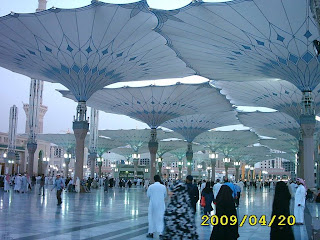
 Assalamualaikum dear brothers and sisters in Islam throughout the world,
The new look of Al Masjid AnNabawi. May Allah Almighty bless us to make a visit to Madina soon.
Parodox of 'intellectuals'
From the Islamic point of view
How Muslims in Malaysia should look and develop their faith.
The points are:-
1. Knowledge credentials, should look at high perspective
2. Ego-low
3. personal pride-low
4. Knowledge horizon-high
5. materialism-low
6. Knowledge sharing-high
7. Respect scholars-high
8. Respect other contributions-high
9. Knowing everything still very low
10. Emotional bank account is very high
The Items that we have and pratice:
1. Paper crenditials looking so high
2. Ego-high
3. personal pride-high
4. Knowledge specialization-high
5. Materialism-high for own benefit
6. Knowledge personalization-high; less sharing knowledge
7. Respect scholars-low
8. Respects other contributions-low
9. Knowing everything-high, for self-satisfaction
10. At last, the emotional bank account is deficit
ConclusionsHow Muslims in Malaysia should look and develop their faith.
The points are:-
1. Knowledge credentials, should look at high perspective
2. Ego-low
3. personal pride-low
4. Knowledge horizon-high
5. materialism-low
6. Knowledge sharing-high
7. Respect scholars-high
8. Respect other contributions-high
9. Knowing everything still very low
10. Emotional bank account is very high
The Items that we have and pratice:
1. Paper crenditials looking so high
2. Ego-high
3. personal pride-high
4. Knowledge specialization-high
5. Materialism-high for own benefit
6. Knowledge personalization-high; less sharing knowledge
7. Respect scholars-low
8. Respects other contributions-low
9. Knowing everything-high, for self-satisfaction
10. At last, the emotional bank account is deficit
The 'intellectuals' looking for money, personal pride and "materialism" rather than knowledge horizon and knowing everything for living to be good muslims.
BACK TO BASICS
How our children and our young generations should respect their lives.
It started from early school days. Basics are universal and eternal.
Robert Fulghum said, "all I really need to know I have learned in kindergarten".
People will pass away, but principles in lives never will, they endur.
The principles are:-
1. Share everything
2. Play fair
3. Do not hit people
4. Put things back where you found them
5. Clean up your own mess
6. Do not take things that are not yours
7. Say you are sorry when you hurt somebody
8. Wash your hands before you eat
9. Flush
10. Warm cookies and cold mik are good for you
This seems simple enough, but are we always practising that?
It started from early school days. Basics are universal and eternal.
Robert Fulghum said, "all I really need to know I have learned in kindergarten".
People will pass away, but principles in lives never will, they endur.
The principles are:-
1. Share everything
2. Play fair
3. Do not hit people
4. Put things back where you found them
5. Clean up your own mess
6. Do not take things that are not yours
7. Say you are sorry when you hurt somebody
8. Wash your hands before you eat
9. Flush
10. Warm cookies and cold mik are good for you
This seems simple enough, but are we always practising that?
Subscribe to:
Posts (Atom)